How the map is put together
Four Areas, sixteen Types, one world in which everything is connected. The Areas are called the Decisive Area, the Influential Area, the Stable Area and the Conscientious Area, and they go back to the four behavioural styles described by William Marston. Within those Areas lie sixteen Types, and beneath them lies the map layer with thousands of words for behaviour.
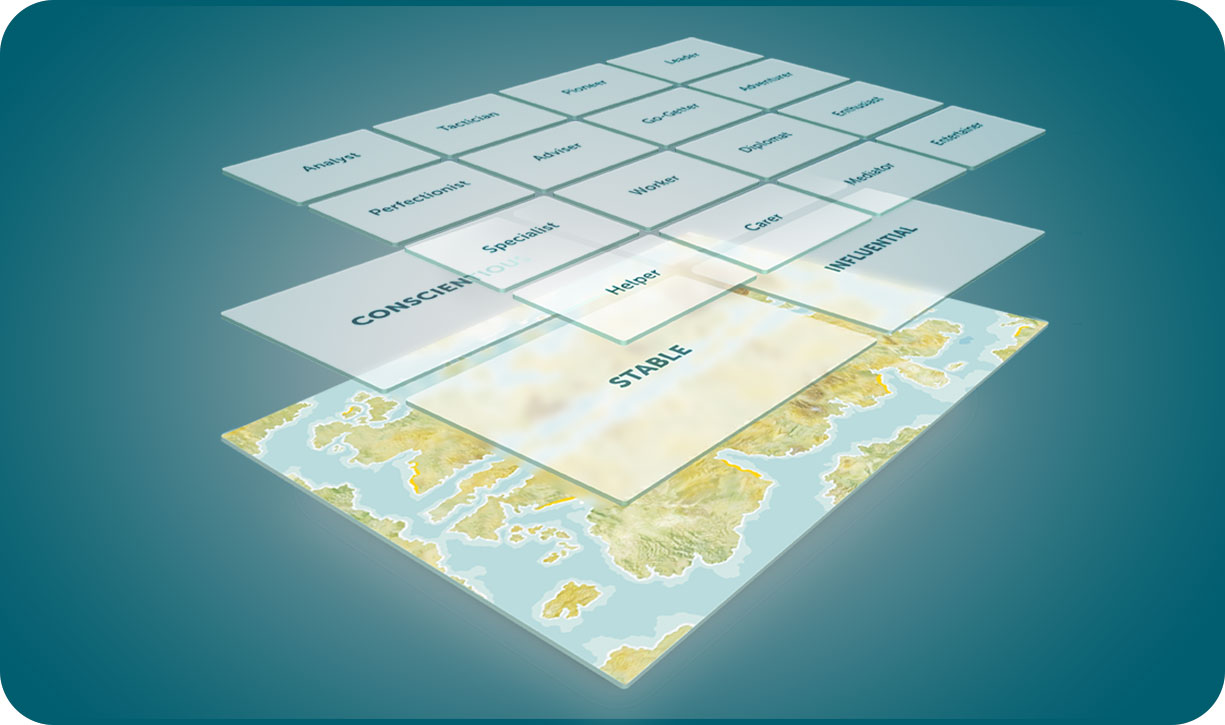
The two axes of The World of Difference
The World of Difference is built around two axes. They determine where the four Areas lie and which areas border on one another.

Areas that lie next to each other share one orientation. Areas that are diagonally opposite differ on both axes. This says nothing about whether people will work well together, but it does show what to pay attention to in order to better understand each other.
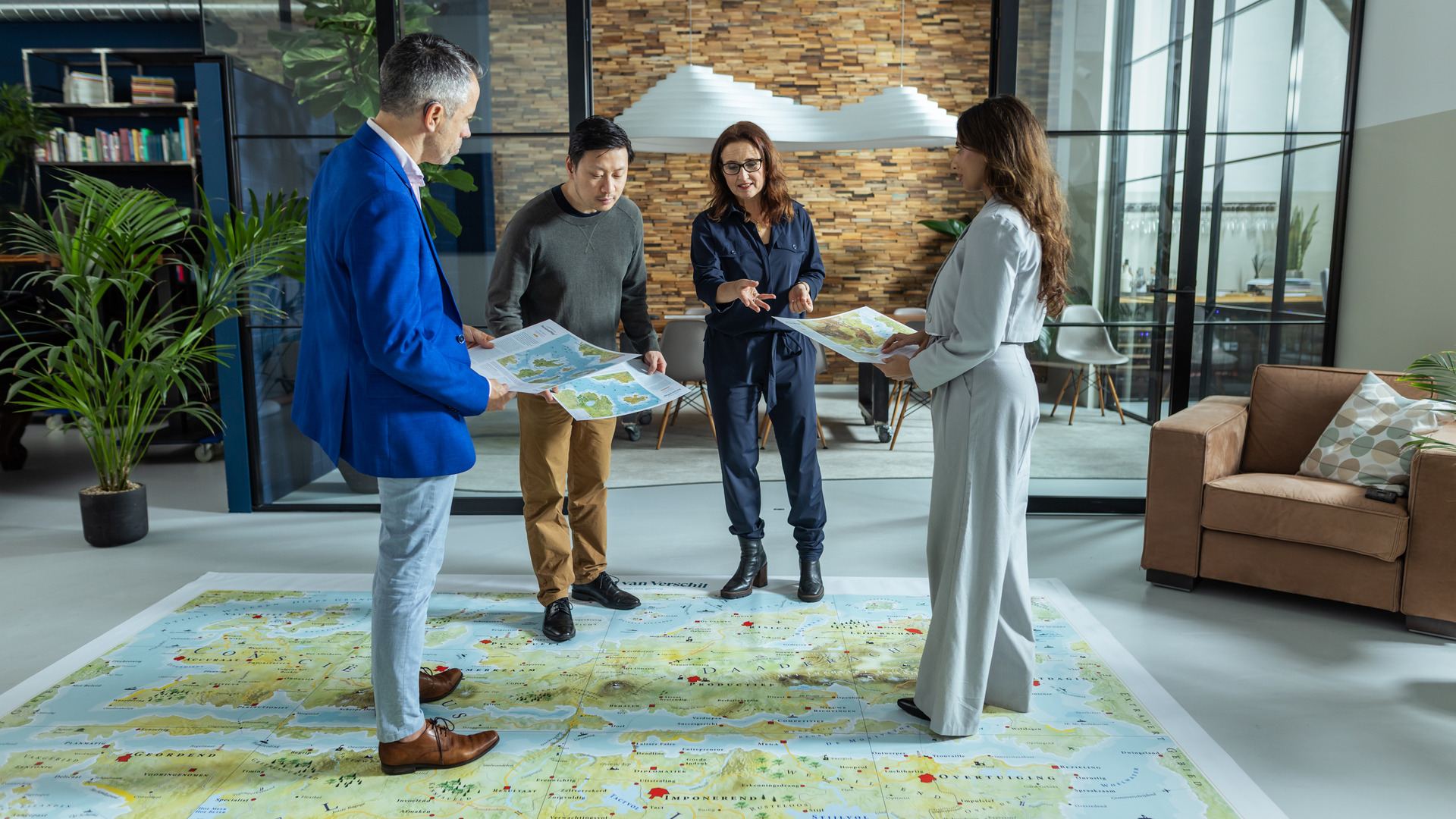
Four ways of dealing with tasks, people and change
Everyone moves through all four Areas, just not with the same ease. The map shows where your behaviour comes naturally and where it takes effort, so you can see the difference instead of guessing at it.

Where the nuance comes in
Each Area contains four Types, making sixteen Types in total. There are also sixteen PersonalMaps—one for each Type. Based on the questionnaire, you receive yours.

Sixteen Types
A Type shows where your behavioural preferences lie—not where you are stuck. Behaviour changes with the context: with pressure, safety, group dynamics, what has just happened in a meeting and who is sitting across from you.
That is why the World of Difference is a world you can move through, not a table that fixes you in place. You can visit someone else’s Area, see how things work there and then return to your own. On the floormap, you can do that literally, in just a few steps.
You don't choose your Type, you recognise it
Your answers reveal your behavioural preferences and determine your Type. The result is not a label, but a recognisable starting point for exploring how you behave in different situations.
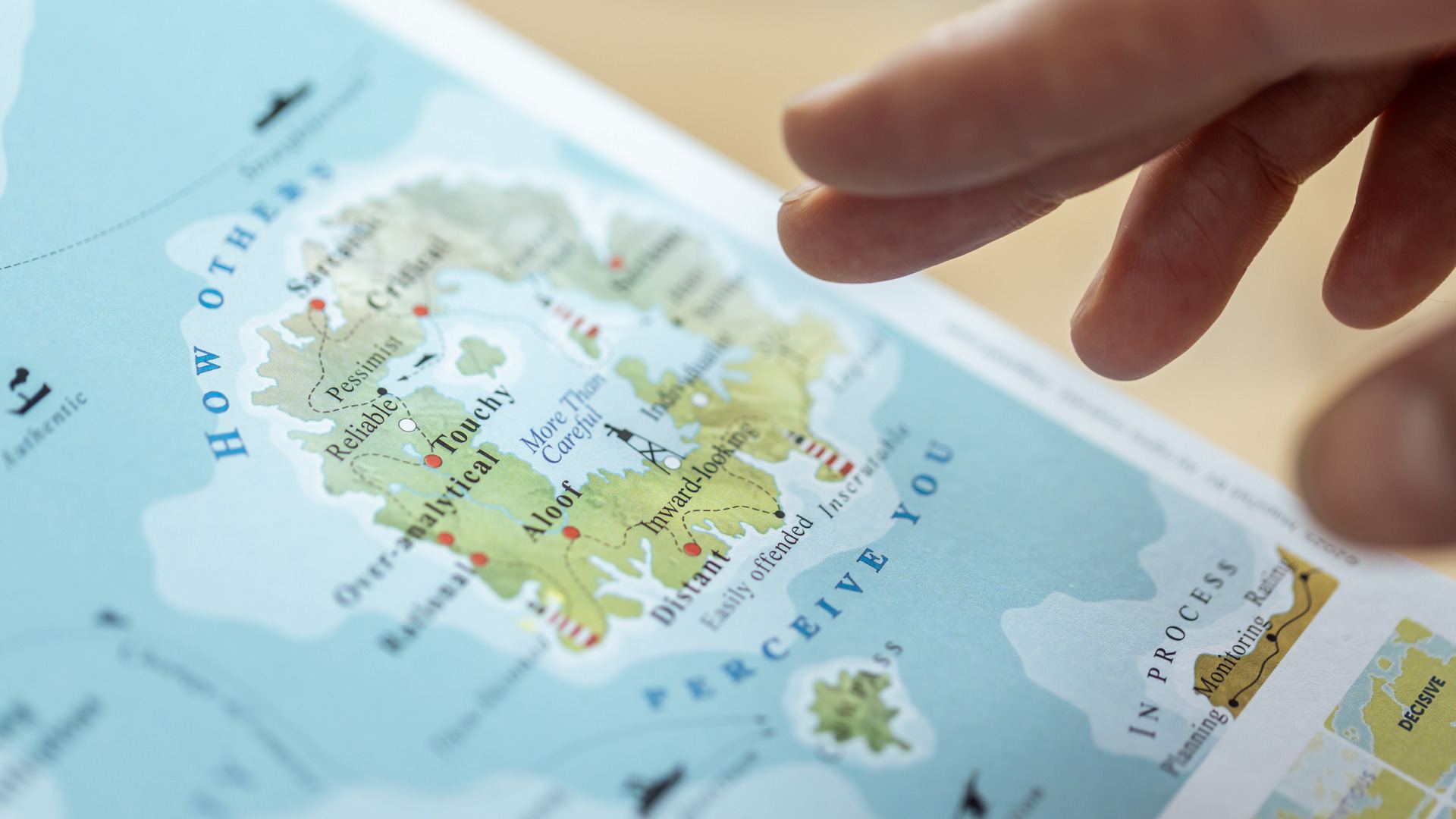
Frequently asked questions about the World of Difference
Below you will find the questions we hear most often, answered clearly and to the point.
What are the four Areas of The World of Difference?
The Decisive Area, the Influential Area, the Stable Area and the Conscientious Area. They go back to the four behavioural styles described by William Marston and give insight into how people deal with tasks, with others and with change.
How many Types are there?
Sixteen, four per Area. They bring the nuance within the four main directions: Pioneer, Leader, Go-Getter, Adventurer, Diplomat, Enthusiast, Mediator, Entertainer, Specialist, Worker, Helper, Carer, Analyst, Tactician, Perfectionist and Adviser.
How is the map laid out?
Along two axes. Horizontally, introvert sits opposite extrovert. Vertically, people-oriented sits opposite task-oriented. Together those two axes form the four Areas, and within each Area lie four Types.
Can I fall into several Types at once?
Your PersonalMap marks one place as your place on the map, but it also shows how you relate to the surrounding areas. In practice almost everyone moves between areas, depending on the situation.
Can my Type change?
Your behavioural preference is reasonably stable, your behaviour is not. The same person shows something different in a crisis meeting than in a brainstorm. The map exists precisely to make that movement visible.
Is one Type better than another?
No. There is no right or wrong in The World of Difference. Every area has its strengths and its challenges. The question is never which Type is best, but what this team needs at this moment and who has something to contribute to that.

Your own place on the map is the best starting point
MapsTell works with Guides in 20 countries, and Heller still speaks with them personally. However you choose to contact us, you can always reach the people at the heart of MapsTell. You can start with a 30-minute Discovery Call. We would much rather hear what you are working on than tell you what we sell. And if we feel that MapsTell is not right for your situation, we will say so.