
MapsTell in education: two maps, two audiences
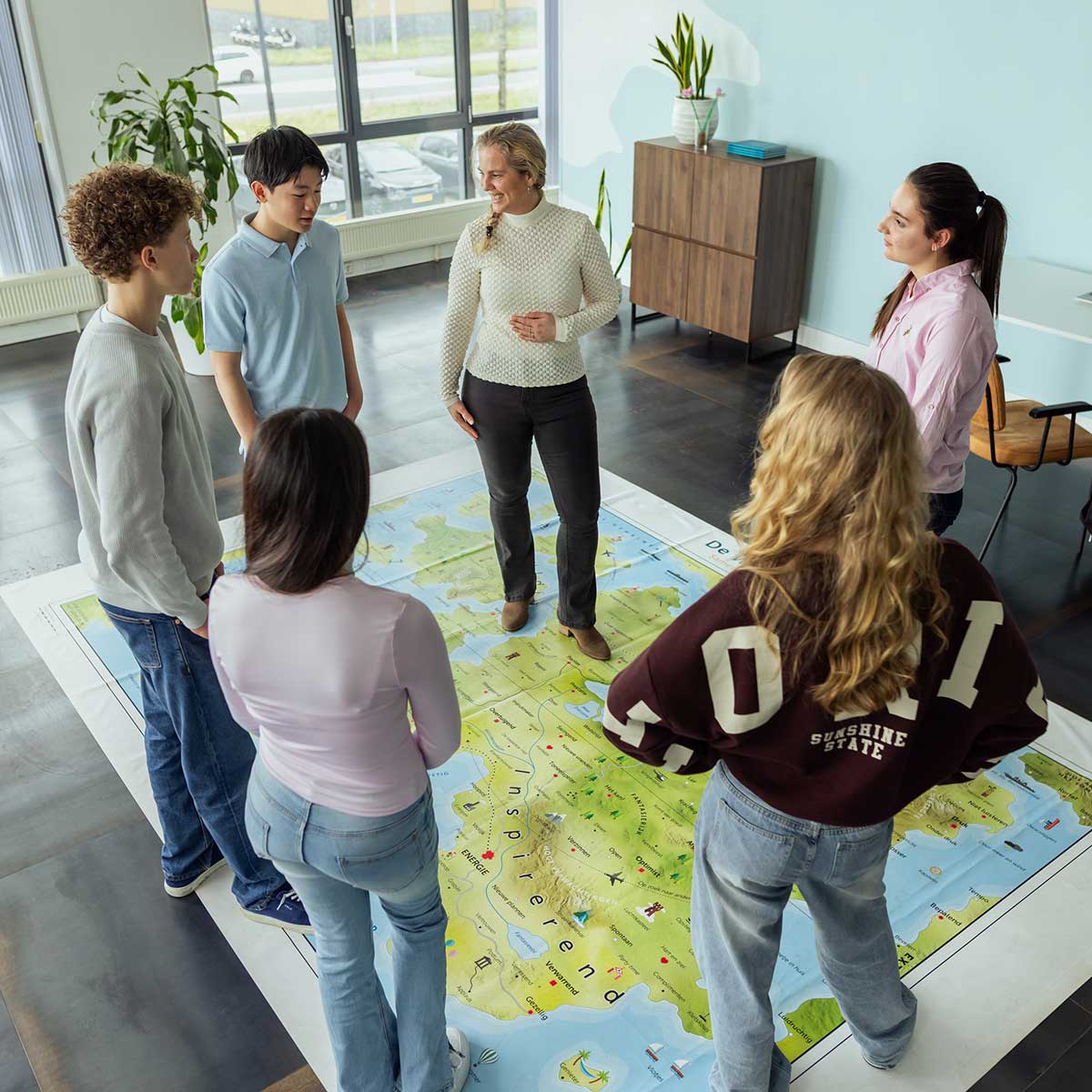
In education, MapsTell is used in two ways. The World of Difference is used in vocational and higher education, both with students and education professionals—for example, to give students insight into their behaviour and leadership style.
For young people aged twelve and over, there is A World to Discover, with its own imagery and language.
Which map suits your audience?
Behaviour may not appear on the timetable, but it has a major influence on how people learn. Which of the two maps is right depends on who is in the room.

Three reasons to step onto the map with your class
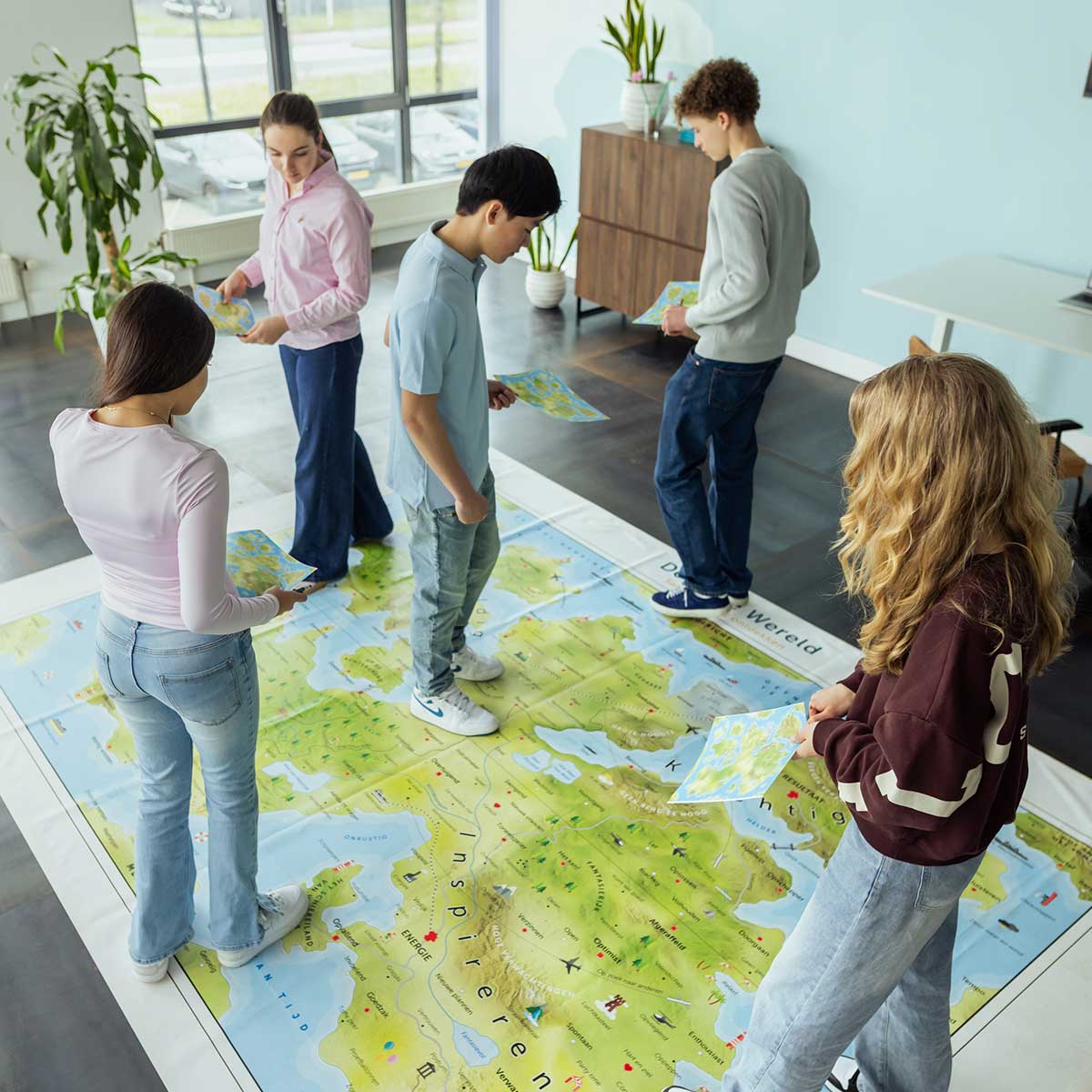
Talking about behaviour with a class is not easy. It can feel awkward or remain superficial. On the map, the conversation feels different.
Who can work with this?
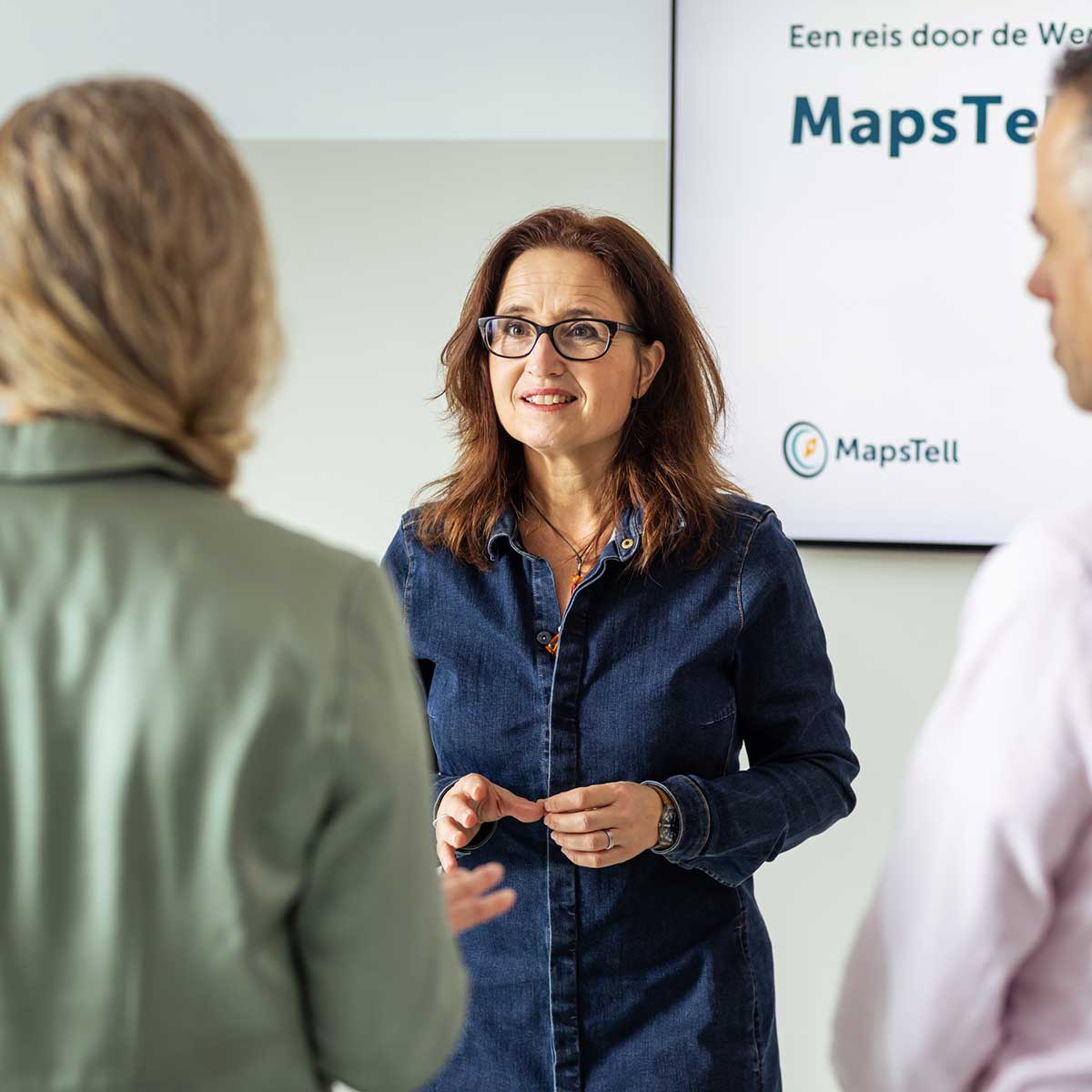
Working with the map requires certification. Knowing the model is different from being able to facilitate a conversation with it.
Frequently asked questions about MapsTell in education
Below you will find the questions we hear most often, with clear answers.
From what age is this possible?
From the age of twelve, with A World to Discover. That map works without a questionnaire and without a profile: young people step onto the Floormap together and discover how behaviour works as they talk.
What is the difference between A World to Discover and The World of Difference?
A World to Discover is made for young people from the age of twelve, with its own imagery and language and without a questionnaire. The World of Difference is used from around the age of seventeen, with a questionnaire and a PersonalMap.
Is MapsTell used in higher education?
Yes. The map is used in vocational and higher education to give students insight into their behaviour and their leadership style, and in the professional development of teachers and school leaders.
Can a teacher use this themselves?
After certification, yes. You start with The World of Difference and then take the YoungTalent Guide certification if you want to work with A World to Discover.
Does this fit into an existing curriculum?
Guides use it where it fits: in mentor hours, in citizenship lessons, during an induction period, in a project week or within a leadership module.

We’re happy to explore where this fits
Which age group is this for, and are you looking for a one-off session or ongoing use?