Real conversations between real people, about behaviour everyone recognises
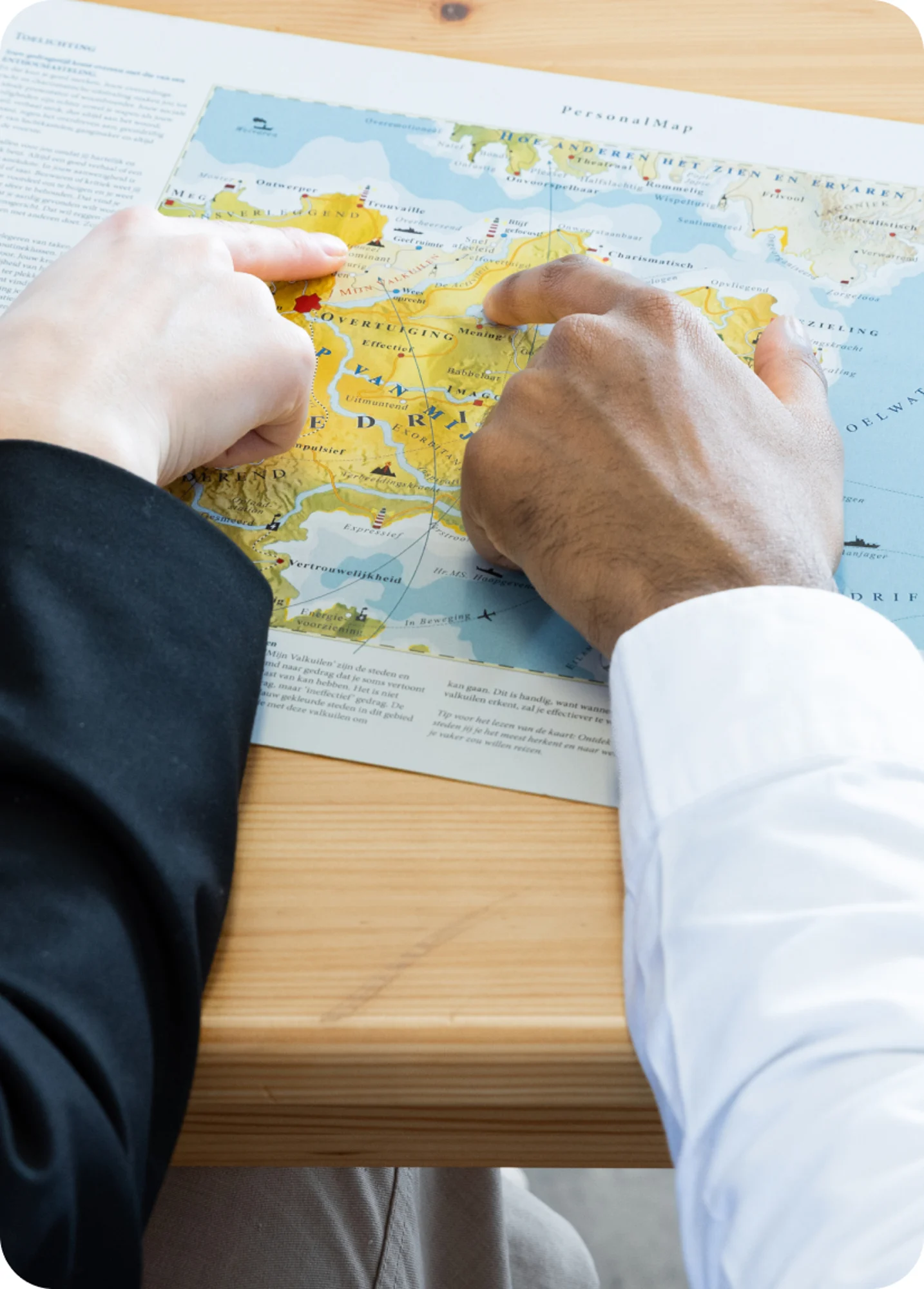
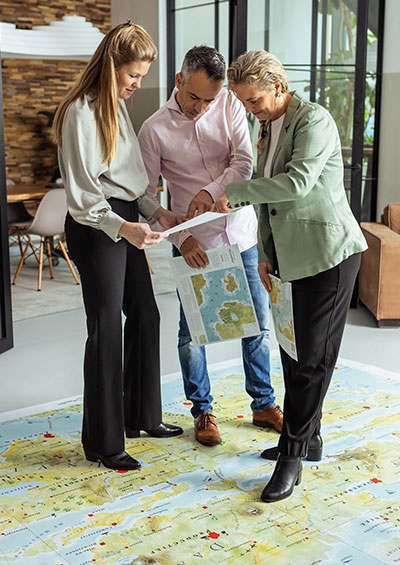
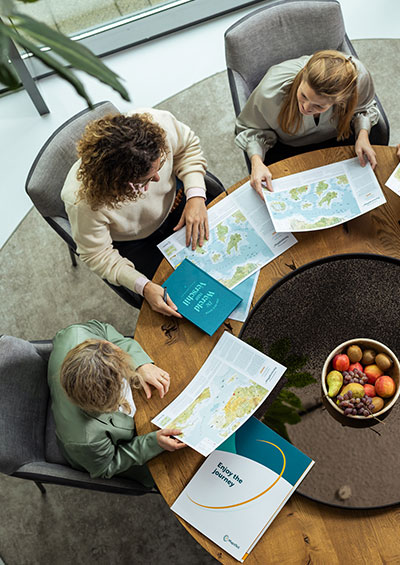
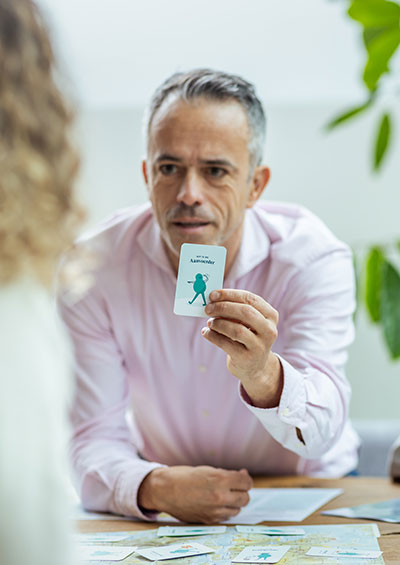
MapsTell is used wherever behaviour needs to become visible and open to discussion: in coaching, team development, leadership programmes, development reviews, customer contact, change programmes, culture and education. The process is always the same: first, everyone literally takes their place on the map. Then comes the conversation. Not about each other, but with each other—in words everyone understands straight away.
Where Guides use the map
Maybe you work with DISC or Insights. These tools provides insight, but you want more impact, more movement, a richer experience and better results.

Personal development
Team development

Leadership development

The HR cycle

Sales and service
Projects and change
One organisation, one shared language
One shared language for behaviour, from the shop floor to the executive team. It saves time explaining things in meetings and across departments, and makes differences easier to discuss.

Culture and an organisation-wide language
Feedback and a culture of speaking up

Education
Youth development
When MapsTell works and when it doesn’t
We would rather be honest up front than disappoint you afterwards. These are the conditions in which the Map works best.
When it doesn't

When it works


Frequently asked questions about The World of Difference
Below you will find the questions we hear most often, answered clearly and to the point.
What group sizes does MapsTell work for?
From individual coaching to large groups. The Floormap comes into its own with teams of roughly four to twenty people. The PersonalMap works just as well in a one to one conversation.
How much time does a MapsTell session take?
The Guide decides that with the client. It ranges from a one hour coaching conversation to several half days, or recurring moments spread across a longer programme.
Does MapsTell work with conflict?
Yes. Because behaviour is placed on the map and not on the person, it can be discussed without becoming personal. That takes the tension out of the conversation without avoiding the subject.
Does MapsTell work between departments?
Yes. The World of Difference makes both the differences and dynamics between individual participants within a team and the differences and dynamics between teams visible.
Can MapsTell be used in education?
Yes, and more than that: our dream is to put every young person on the map. In vocational and higher education as well as with young people in secondary education. From the age of twelve you work with A World to Discover, a map with its own imagery and language for that group.
Do we have to overhaul our existing programme for this?
No. Guides use the map where it fits: on a single team day, in a coaching conversation or at several moments in a longer programme.

Reading about a landscape is not the same as walking through it
MapsTell works with Guides in 20 countries, and Heller still speaks with them personally. However you choose to contact us, you can always reach the people at the heart of MapsTell. You can start with a 30-minute Discovery Call. We would much rather hear what you are working on than tell you what we sell. And if we feel that MapsTell is not right for your situation, we will say so.