
What slows a team down rarely makes it onto the agenda
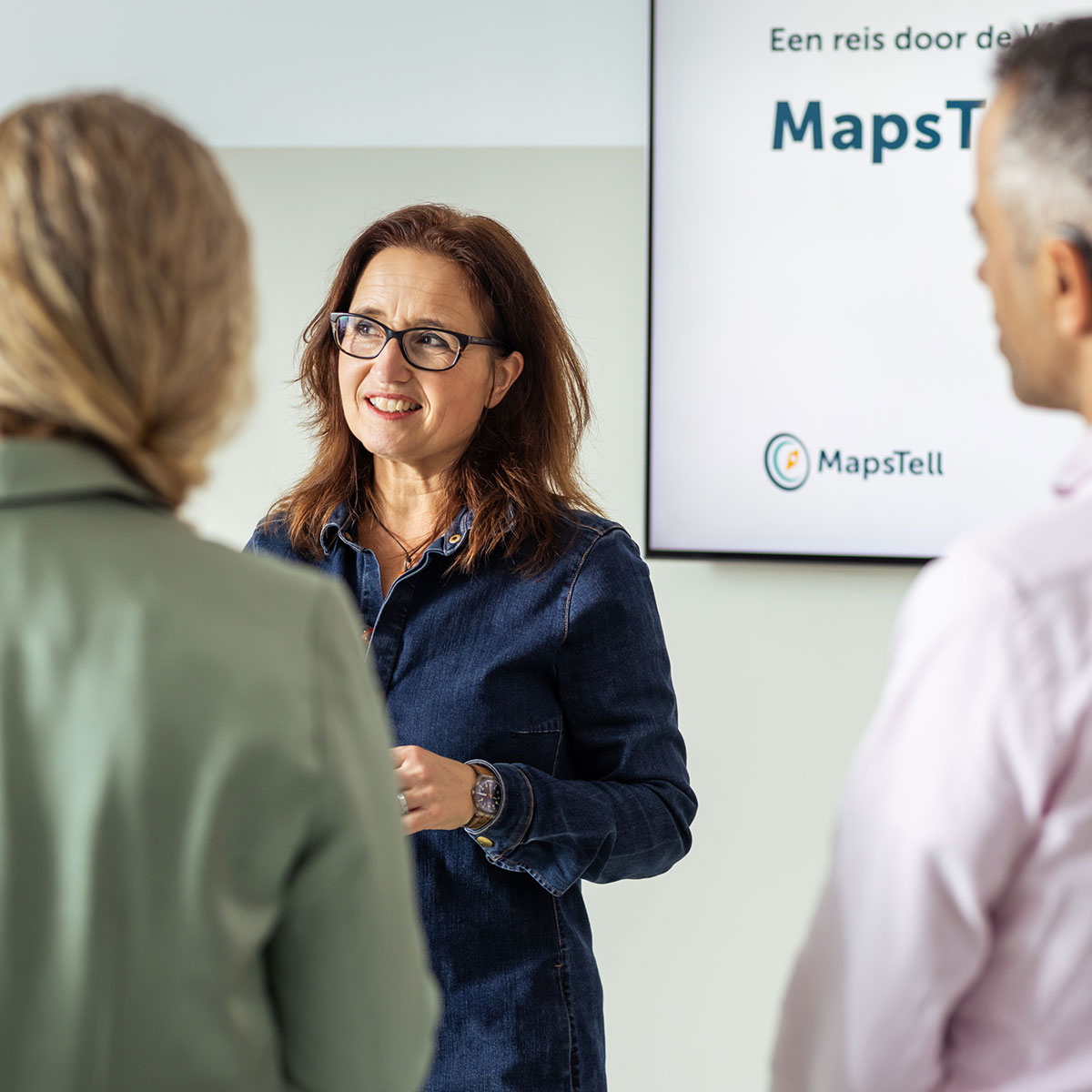
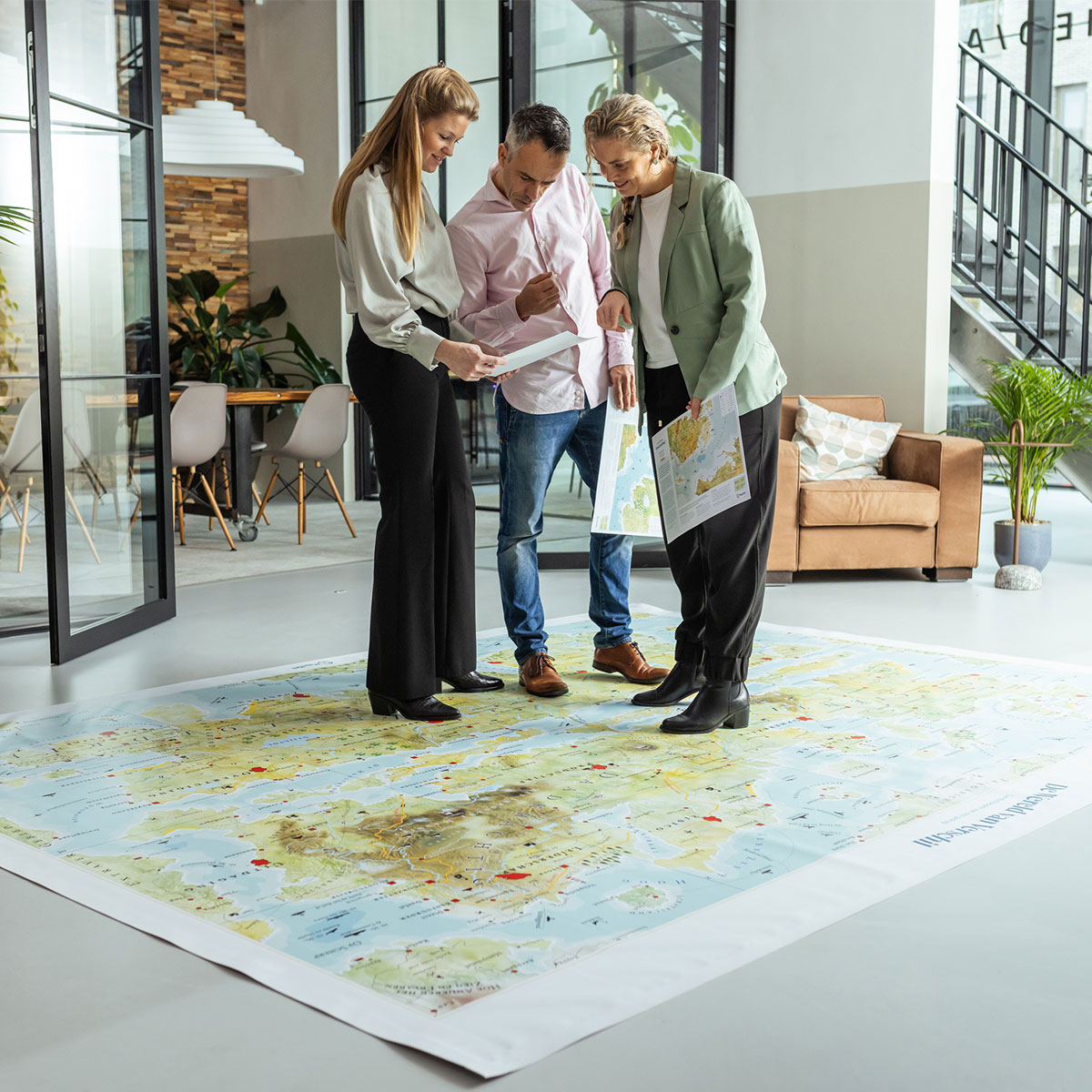
In team development, MapsTell makes team dynamics visible and open to discussion. Everyone receives a PersonalMap. The team then stands together on the floormap and sees at a glance how their behavioural preferences relate to one another. The World of Difference creates a safe layer and provides the words needed for a genuinely meaningful conversation.
Because a team is more than the sum of its members. There are patterns within it: who takes the lead, who slows things down, which subject keeps being avoided and which Area on the map stays empty? Those patterns determine the result, but are rarely named.

Four exercises Guides use
Every team session is built around the floormap. These four exercises show how a session moves from looking to doing.
The team on the map
Everyone chooses their place and explains why. The make-up of the team becomes visible immediately: where are team members standing close together, who is standing alone and which Area stays empty? How do we relate to one another?
Step into your colleague's world
Participants literally step into their colleague’s world. From there, they look at the same situation again and notice how different it looks.
Naming the friction
Where does the tension show up on the map? The conversation is about the map, not about the person. That makes it possible to name what is happening without anyone feeling attacked.
Making agreements
What do we need from each other, and which step do we take first? Participants take that step literally on the floormap.
What is different in the team afterwards
The team gains a shared language for behaviour. Differences become easier to discuss, agreements become more concrete and people make better use of each other’s strengths.

When MapsTell works and when it doesn’t
We would rather be honest up front than disappoint you afterwards. These are the conditions in which the map works best.
When it doesn't

When it works
Also for departments that work alongside each other, but not together
When two teams see that they work in different ways, it becomes clear why handovers stall. One side feels caught off guard, while the other feels held back.
Frequently asked questions about the PersonalMap
Below you will find the questions we hear most often, with clear answers.
How long does a team session with MapsTell take?
The Guide decides that together with you. A team day is common, but it can also be spread across several moments in a longer programme.
What team sizes does this work for?
It works with as few as two people. The Floormap comes into its own with roughly four to twenty participants. With larger groups, Guides work in rounds or with several Floormaps.
How do you make team dynamics visible?
By having the team literally stand on the map. At a glance you see where people stand close together, where someone stands alone and which areas stay empty. That last one often says the most about what a team is missing.
Does this work with a team that is not waiting for it?
There is little theory involved and the tone is light and playful, so resistance is usually lower than with a classic training format. Teams that dropped out of training before often join in enthusiastically.
Do we have to overhaul our existing programme for this?
No. Guides use the map where it fits: on a single team day or at several moments in a longer programme.

Tell us what is going on and we will find a suitable certified Guide
Guides work in different sectors, languages and countries. We match you with someone who fits your team and your needs.